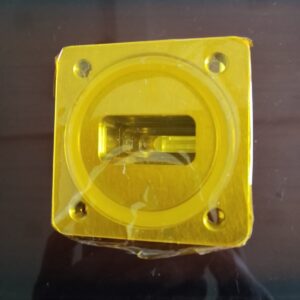
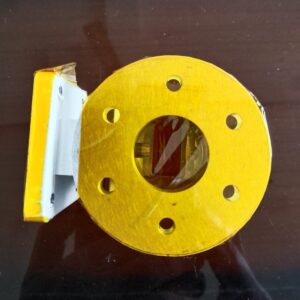
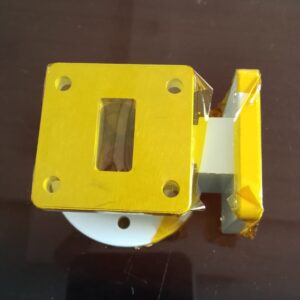
Dual Port Rx OMT
• Working frequency band: 10700 – 14500 GHz
• Both ports are Rx only.
• Insertion loss: < 0.2 dB Polarization isolation: > 25 dB
• VSWR: 1.20:1 Max
• Interface: WR75
The Ku-Band OMT offers a range of benefits that make it an indispensable component in modern satellite communication systems. Below are the primary features and advantages:
• Dual-Polarization Capability: The OMT is designed to handle both horizontal and vertical polarization, which effectively doubles the available communication capacity without the need for additional bandwidth.
• Low Insertion Loss: The OMT is engineered to minimize signal loss, ensuring that the transmitted and received signals maintain high integrity and clarity.
• High Isolation: One of the key features of the Ku Band OMT is its ability to provide excellent isolation between the polarization channels, preventing signal interference and ensuring reliable communication.
• Compact and Durable Design: The OMT is compact and lightweight yet highly durable, making it suitable for both terrestrial and space-based satellite communication systems.
• Wideband Operation: The OMT operates across the entire Ku Band range (12 GHz to 18 GHz), ensuring compatibility with a wide variety of communication applications.
• Reliability: Built to withstand harsh conditions, the Ku Band OMT is designed for long-term operation, even in challenging environmental conditions.
•On both ports use 2 Lnbs for receiving
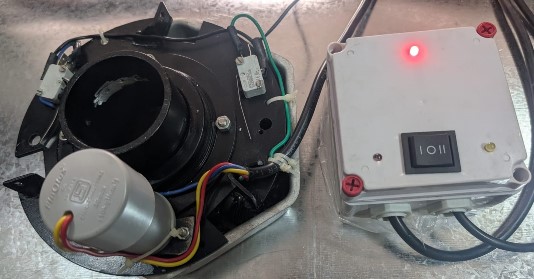
Motorized LNB feed polarizer covers horizontal, vertical, and circular (LHCP, RHCP) polarization.
We are offering customized motorized LNB polarizers for C band, Ku band, Ka band, and S band LNB.
Satcom Product
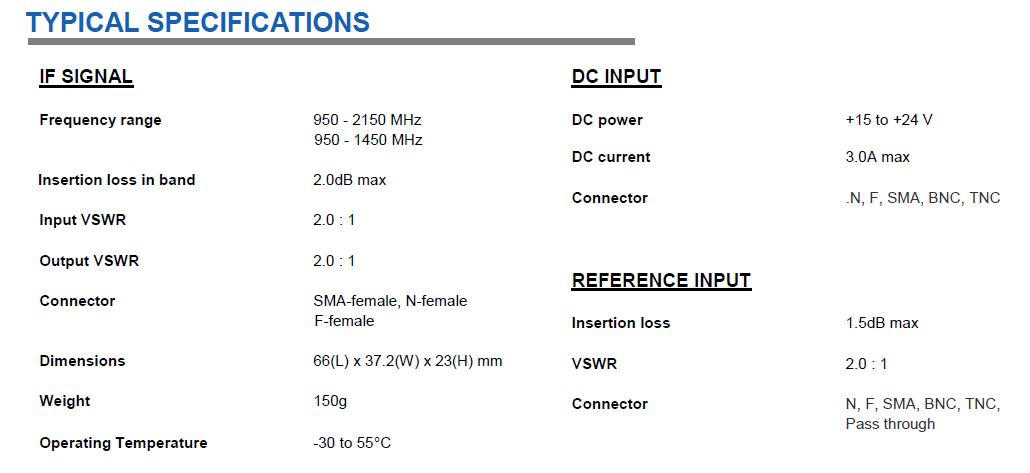
Technical Specification
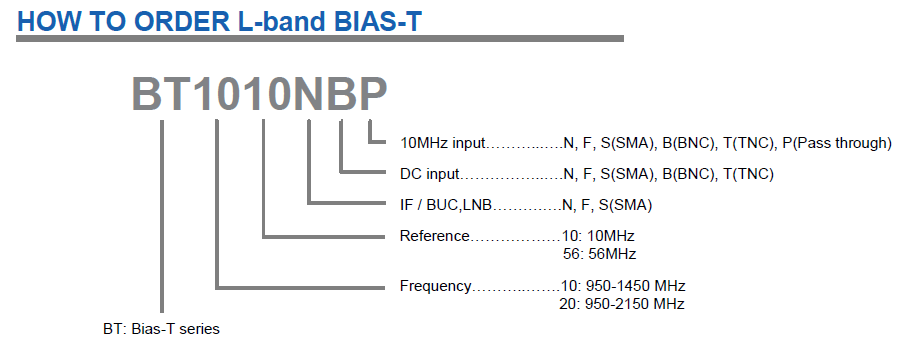
Frequency 950-2150 MHz 950-1450 MHz
DC +15-24 V, 3A
In-band IL 2dB
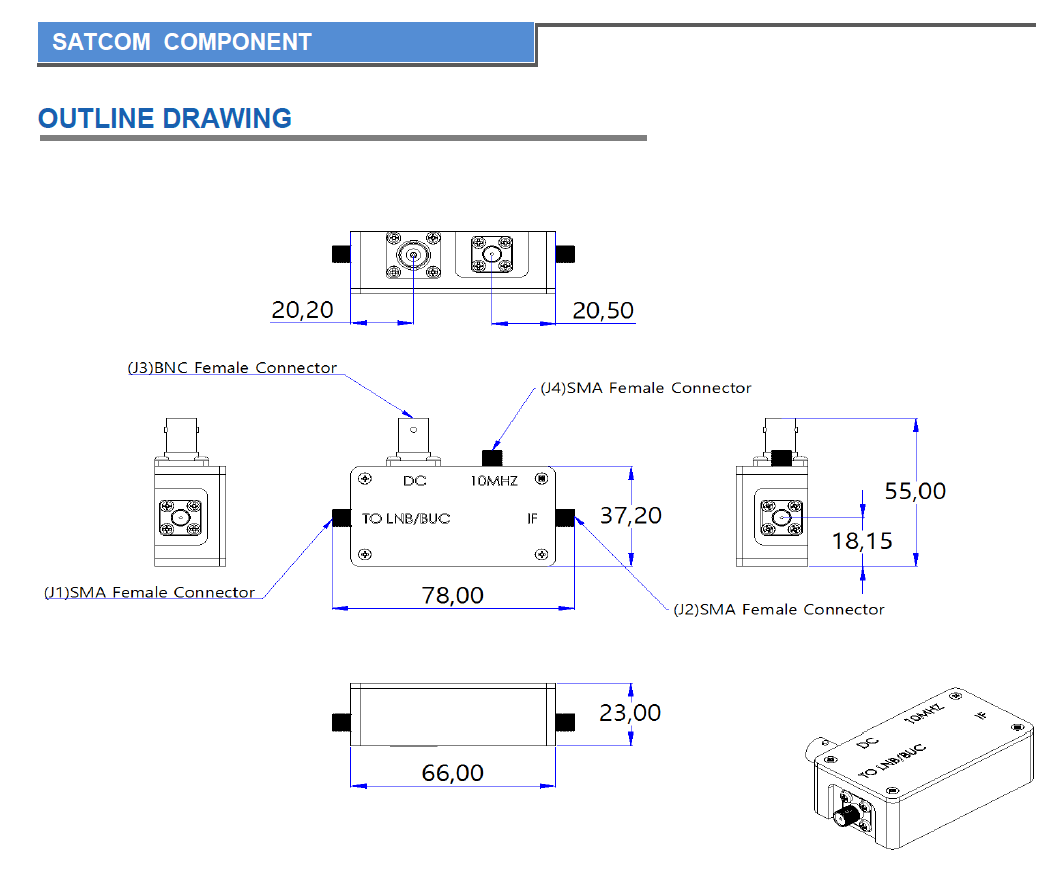
Connector (In/Out) N,F,SMA
Connector (DC) N,F,SMA,BNC,TNC
Connector (10MHz) N,F,SMA,BNC,TNC
Download Document
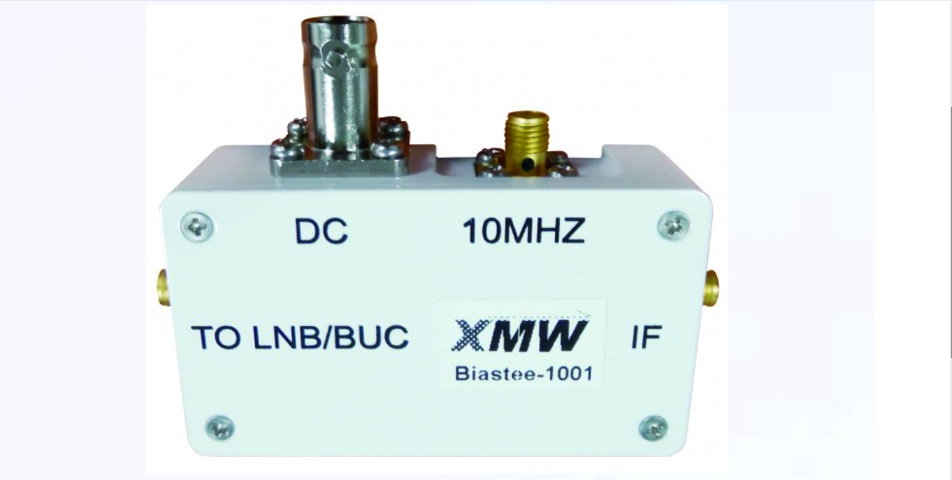
L-Band Bias Tee
Benefits of External Referencesfor LNB:
Improved Phase Noise and Stability:
External references, particularly GPSDOs, offer significantly better phase noise and stability compared to internal references.
Higher Data Rate Applications:
The improved performance of external references makes them suitable for applications requiring high data rates and precise timing.
Less Susceptible to Drift:
External references are less affected by temperature variations and other environmental factors that can cause internal references to drift.
Features & Technical Specification
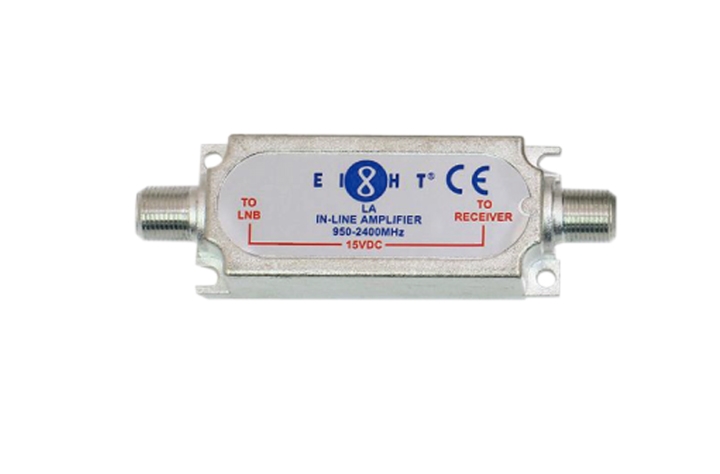
* Provides a range of amplification at 950 to 2150 MHz
* Gain 20Db
* Passes L-Band, 10 MHz, 22 kHz and DC signals with minimal loss
* Nickel-plated zinc alloy die-cast
* Designed for inline boosting satellite IF signal
* Power supply from the receiver via coaxial cable
* 100mA power passing to LNB end
* Operating voltage +12 to +20 V
* All ports F-Connector, 75ohm
* Low Noise Amplifier
* Input VSWR 2.2 : 1
* Output VSWR 2.2 : 1
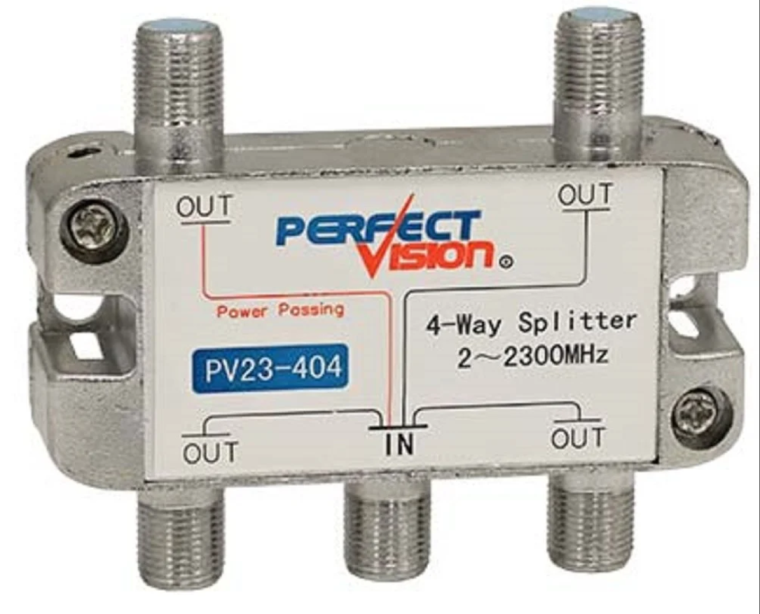
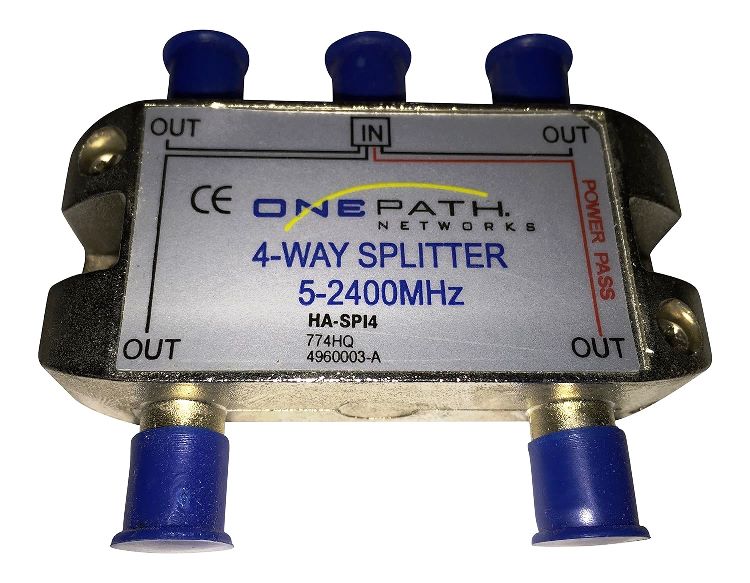
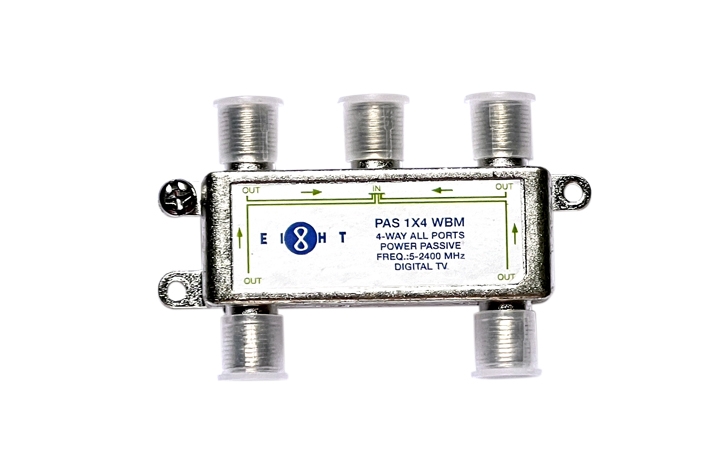
L-band One Port PowerPass 1×4 Way Splitter
Wideband 950-2400 MHz satellite Splitter
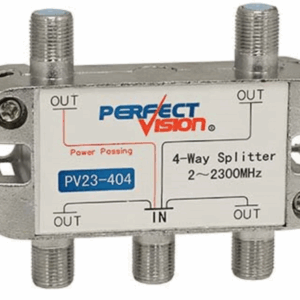
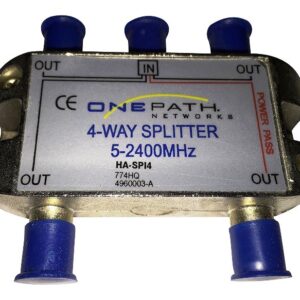
Features
* All ports power pass
* Nickel-plated zinc alloy die-cast
* Suitable for RF (5-1000 MHz)
* IF (900-2150 MHz) distribution Splitter
* Suitable for analog and digital signals
* All Port F-type connectors, 75Ω
* Low insertion loss, high return loss and isolation for CATV, Satellite TV & MMDS
* Wideband Splitter
* Use as a DC stop for the spectrum analyzer.
* Use as a DC power inserter.
Specification
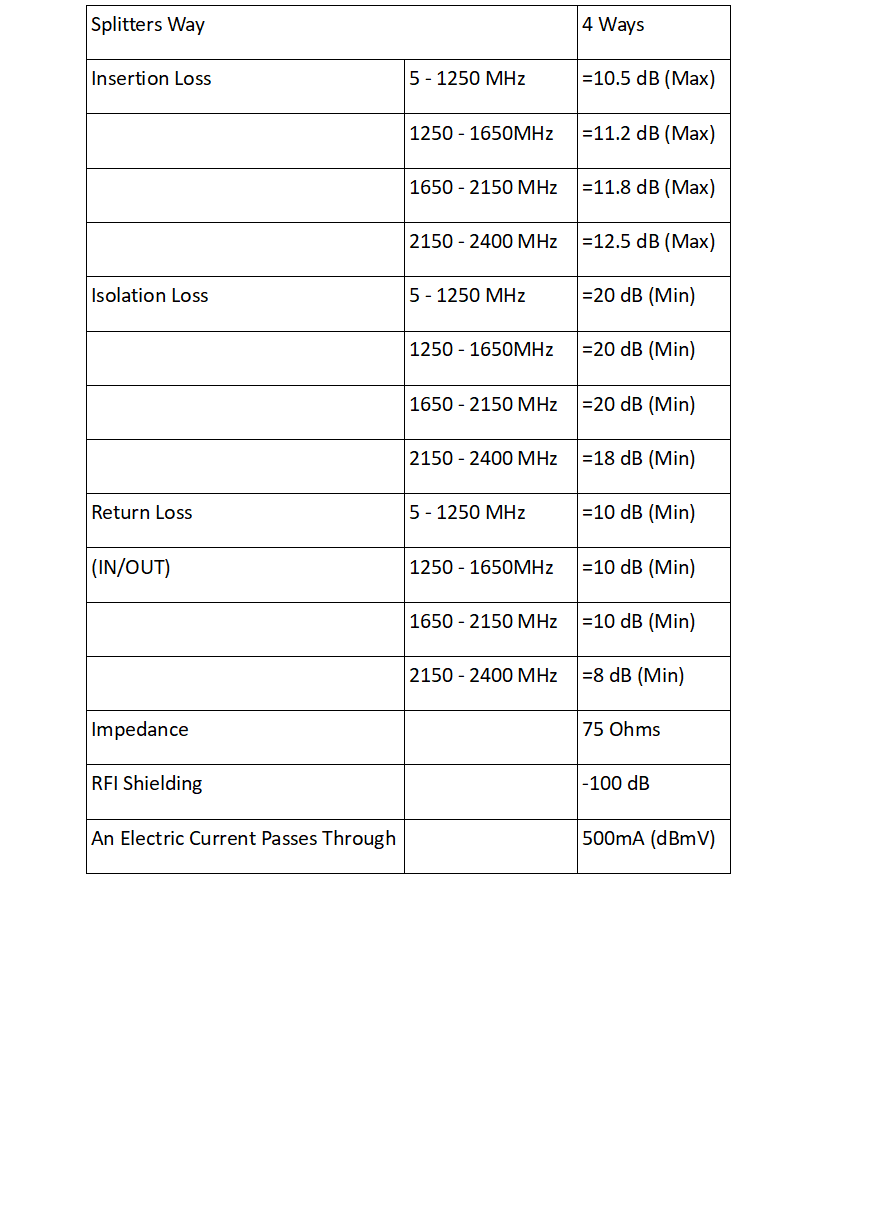
Download technical data-sheet
EIGHT-LIMITED-Satellite-Solution-Wide-Band-Splitter-SPL-WMB-Series